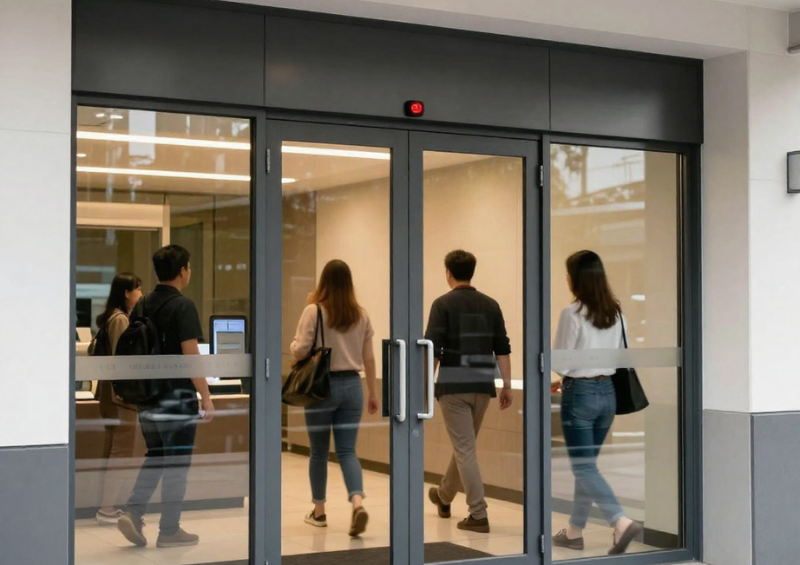
Automatic doors are now a common feature in Australian homes, retail stores, offices, clinics, and public buildings. They improve accessibility, convenience, and hygiene—but they also introduce moving mechanical and electrical risks if not designed, installed, and maintained correctly.
For both homeowners and businesses, understanding automatic door safety requirements in Australia is essential. Compliance is not just about avoiding fines or liability; it’s about protecting people from injury and ensuring doors operate reliably in everyday use.
This buyer’s guide explains what Australian safety standards apply to automatic doors, how they affect automatic sliding door systems, and what you must consider when buying, installing, or upgrading an automatic door.
Why automatic door safety matters
Automatic doors are classified as powered moving equipment. Unlike manual doors, they:
-
Open and close without direct human control
-
Operate repeatedly throughout the day
-
Interact with vulnerable users such as children, elderly people, and wheelchair users
If safety requirements are ignored, automatic doors can cause:
-
Impact injuries
-
Entrapment
-
Pinching or crushing hazards
-
Unexpected movement
For this reason, Australian regulations treat automatic sliding opener systems as safety-critical installations, especially in commercial and public environments.
Who is responsible for automatic door safety
Responsibility depends on how and where the door is used.
Homeowners
Homeowners are responsible for ensuring:
-
The automatic sliding opener is installed correctly
-
The door does not present a foreseeable risk to occupants or visitors
-
Any modifications or repairs maintain safe operation
Businesses and building owners
Businesses, strata bodies, and facility managers carry higher obligations. They must:
-
Comply with Australian safety and building regulations
-
Ensure ongoing maintenance and inspections
-
Protect employees, customers, and the public
Failure to meet safety requirements can result in legal liability if an injury occurs.
Key Australian standards affecting automatic sliding doors
Australia does not rely on a single rule for automatic doors. Instead, safety requirements come from multiple standards and codes that work together.
These standards influence how automatic sliding opener systems are designed, installed, and maintained.
Australian Building Codes and access regulations
Automatic doors in many settings must comply with the National Construction Code (NCC), which governs:
-
Building safety
-
Access and egress
-
Fire and emergency considerations
In public and commercial buildings, automatic sliding openers are often used to meet accessibility requirements, ensuring safe entry for people with disabilities.
Workplace health and safety obligations
In workplaces, automatic doors are considered plant or powered equipment. Under Australian workplace safety laws, employers must:
-
Identify risks associated with automatic doors
-
Eliminate or minimise those risks
-
Maintain equipment in a safe condition
This applies to offices, warehouses, retail spaces, medical facilities, and shared residential buildings.
Why automatic sliding doors require specific safety features
Automatic sliding openers move horizontally and often operate at relatively high frequency. Without proper safeguards, they can:
-
Close on people or objects
-
Fail to detect slow-moving users
-
Continue moving when an obstruction is present
Modern automatic sliding opener systems incorporate multiple safety mechanisms to prevent these scenarios.
Mandatory safety features in automatic sliding doors
While exact requirements depend on the application, most compliant systems include the following features.
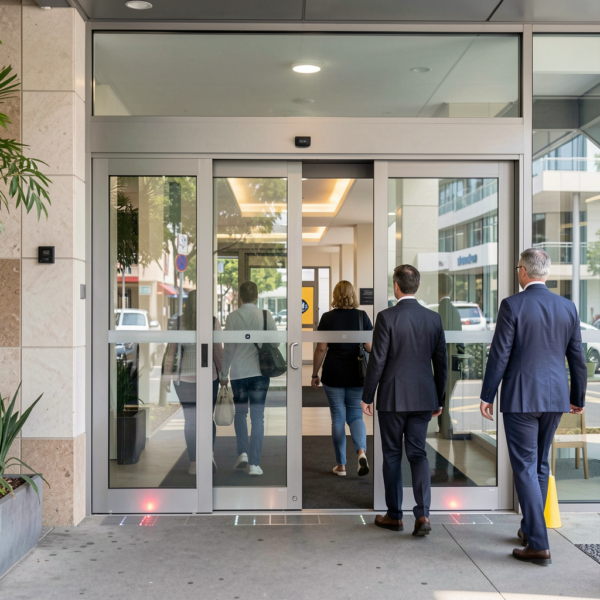
Presence detection sensors
Sensors detect people or objects in the doorway and prevent the door from closing.
Obstruction detection
If the door encounters resistance, it must stop or reverse to prevent injury.
Controlled opening and closing speeds
Doors must move at safe speeds, particularly in areas with children or elderly users.
Emergency manual operation
In power failure situations, doors must be able to be opened manually or default to a safe state.
Sensor placement and coverage requirements
Sensor positioning is critical to safety.
A compliant automatic sliding opener should:
-
Detect users approaching from both sides
-
Cover the full width of the opening
-
Detect slow-moving individuals
Incorrect sensor placement is one of the most common causes of safety incidents.
Door force and impact limits
Automatic doors must operate within safe force limits.
Excessive force can cause:
-
Bruising
-
Crushing injuries
-
Damage to mobility aids
Modern systems use force monitoring to ensure the door stops if resistance exceeds safe levels.
Safety considerations for children and vulnerable users
Automatic sliding openers are often used in environments where vulnerable people are present.
Extra care is required in:
-
Childcare centres
-
Schools
-
Hospitals
-
Aged care facilities
In these settings, safety sensors and reduced operating speeds are especially important.
Residential vs commercial safety requirements
Residential installations
In homes, requirements are less prescriptive but safety is still essential. Homeowners should ensure:
-
Sensors are correctly installed
-
Doors do not close forcefully
-
Children cannot be trapped or struck
Commercial installations
Commercial doors must meet stricter standards due to:
-
Higher foot traffic
-
Public access
-
Legal duty of care
Automatic sliding opener systems used in businesses must be robust, well-maintained, and compliant.
Fire safety and emergency egress
Automatic sliding doors must not compromise emergency exits.
In many cases:
-
Doors must fail-safe (open or unlock) during power loss
-
Integration with fire alarm systems may be required
-
Door operation must not obstruct evacuation
Fire safety considerations are critical when selecting an automatic sliding opener system.
Maintenance and inspection requirements
Safety compliance does not end after installation.
Regular maintenance is essential to:
-
Ensure sensors remain aligned
-
Detect wear in rollers and tracks
-
Confirm force and speed settings remain safe
Neglected maintenance is a common cause of automatic door accidents.
How often should automatic doors be inspected
Inspection frequency depends on usage.
Typical guidance includes:
-
High-traffic commercial doors: frequent inspections
-
Residential doors: periodic checks
-
After any modification or repair: immediate inspection
Keeping records of inspections helps demonstrate compliance.
Common safety risks caused by poor installation
Many safety issues stem from installation errors rather than faulty equipment.
Common problems include:
-
Sensors mounted too high or too narrow
-
Door panels misaligned
-
Incorrect force settings
-
Inadequate testing after installation
Professional installation reduces these risks significantly.
Choosing a compliant automatic sliding door system
When buying an automatic sliding door, safety should be a primary selection factor.
Look for systems that:
-
Are designed for Australian conditions
-
Include multiple safety sensors
-
Allow fine-tuning of speed and force
-
Have clear documentation and support
Cheaper systems often lack advanced safety features.
Retrofitting safety features to existing doors
Older automatic doors may not meet current safety expectations.
In many cases, safety can be improved by:
-
Upgrading sensors
-
Replacing control units
-
Adjusting speed and force settings
Retrofitting is often more cost-effective than full replacement.
Liability risks for non-compliant doors
If an injury occurs and the door is found to be unsafe:
-
Homeowners may face civil claims
-
Businesses may face fines, lawsuits, or insurance issues
-
Strata bodies may be held responsible
Compliance helps protect not only users but also property owners.
Insurance implications of automatic door safety
Insurers increasingly look at safety compliance.
Non-compliant automatic sliding openers may:
-
Void insurance coverage
-
Increase premiums
-
Lead to denied claims after incidents
Ensuring compliance reduces financial risk.
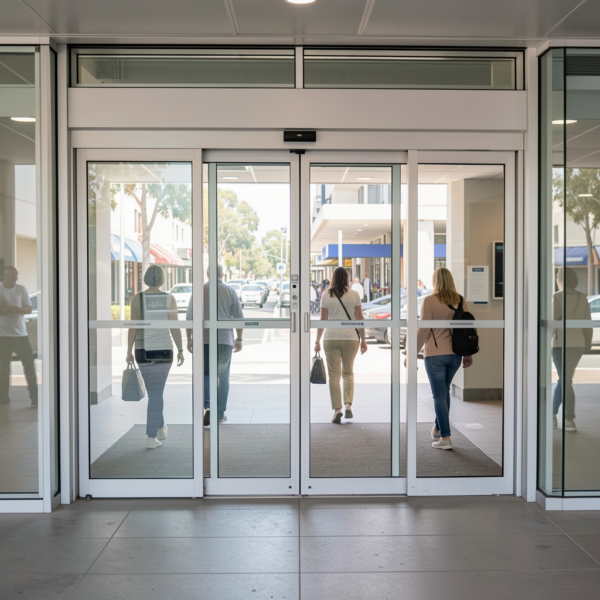
Automatic sliding doors in healthcare environments
Healthcare facilities face additional safety expectations.
Doors must:
-
Accommodate wheelchairs and beds
-
Operate smoothly and quietly
-
Minimise physical contact
Safety and reliability are essential in these environments.
Hygiene and touch-free operation
Modern safety standards also consider hygiene.
Automatic sliding doors reduce:
-
Touchpoints
-
Cross-contamination
-
Infection risk
This has become especially important in clinics, hospitals, and aged care.
Smart controls and safety monitoring
Advanced systems offer smart features that support safety, such as:
-
Usage monitoring
-
Fault alerts
-
Integration with building systems
These features help identify issues before they become hazards.
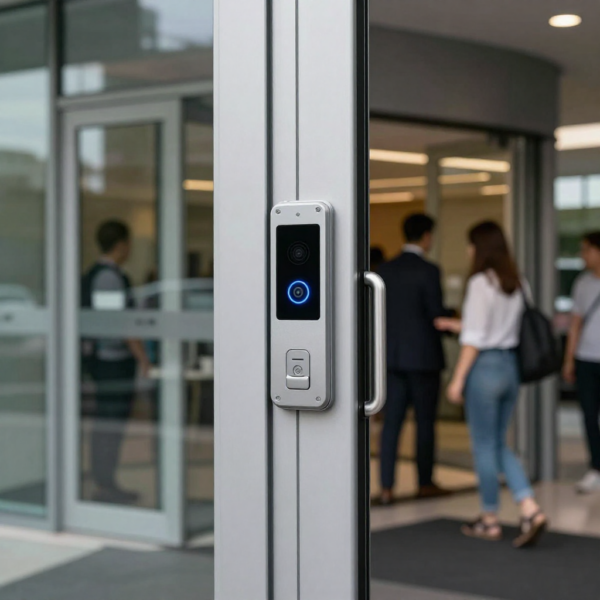
Environmental and site-specific considerations
Safety requirements can vary depending on:
-
Indoor vs outdoor installation
-
Exposure to wind or weather
-
Space constraints
A system suitable for one site may not be safe for another.
Training staff and occupants
In commercial settings, staff should understand:
-
How the door operates
-
What to do during faults
-
How to recognise unsafe behaviour
User awareness complements technical safety features.
Common myths about automatic door safety
Some common misconceptions include:
-
“Automatic doors are always safe by default”
-
“If it works, it’s compliant”
-
“Maintenance is optional”
In reality, safety depends on correct design, setup, and upkeep.
When to replace an automatic sliding opener
Replacement may be necessary if:
-
Safety features are outdated
-
Parts are no longer supported
-
The door cannot be adjusted to safe limits
Newer systems often offer significantly improved safety.
Cost vs safety considerations
While safety-focused systems may cost more upfront, they:
-
Reduce injury risk
-
Lower liability exposure
-
Provide longer service life
Safety should be seen as an investment, not an expense.
Working with qualified professionals
Qualified installers and technicians understand:
-
Australian safety requirements
-
Correct sensor placement
-
Compliance testing procedures
Professional support is one of the most effective ways to ensure safety.
Final thoughts
Automatic doors provide significant benefits—but only when they are safe, compliant, and well-maintained. For Australian homeowners and businesses, understanding automatic door safety requirements is essential to protecting people, property, and peace of mind.
A compliant automatic sliding door system combines proper design, reliable safety sensors, correct installation, and ongoing maintenance. By prioritising safety from the beginning, you ensure your automatic door delivers convenience and accessibility without unnecessary risk.
Whether you are installing a new system or reviewing an existing one, safety should always come first.
Upgrade to an Automatic Sliding Door that meets Australian safety requirements