

Now, the current commercial sites are larger, and residential systems are smarter. For monitoring providers, the difference between a profitable operation and an overwhelmed one often comes down to one critical factor: alarm escalation.
A well-designed alarm escalation framework ensures that alerts are validated and acted on in a structured manner. It minimises false dispatches and reduces unnecessary strain on emergency services. Whether in residential homes, retail chains, warehouses, or multi-site commercial facilities, escalation logic must be deliberate and technology-driven.
This guide breaks down how monitoring providers can implement alarm-escalation models, design multi-zone workflows, and integrate smart deterrents, such as the VISION Z-Wave Outdoor Siren, into a layered response strategy.
What Is Alarm Escalation? A Structured Definition for Monitoring Providers
For monitoring providers, alarm escalation is a tiered response protocol that activates once an event has been detected and validated. It is not simply about notifying authorities; it’s about applying structured decision-making logic to ensure the right response occurs at the right time.
Alarm escalation typically follows four distinct stages:
- Event Detection – A device such as a motion sensor, door contact, or shock sensor registers an anomaly.
- Event Verification – The system or operator validates the event using cross-sensor logic, video feeds, or client confirmation.
- Escalation Stages – Notifications or actions are triggered in predefined tiers (e.g., client, keyholder, patrol, police).
- Resolution Confirmation – The event is closed with documentation and confirmation of the outcome.
Monitoring providers may use either:
- Single-path escalation, where alerts move sequentially from one contact to the next, or
- Multi-path escalation, where multiple notifications (SMS, app push, phone) are sent simultaneously to reduce response time.
In Australia and New Zealand, alarm response frameworks often align with AS/NZS standards for intrusion and alarm systems, which emphasise verification and reduction of false dispatch. Poorly designed alarm escalation workflows can result in excessive false call-outs, increased operational costs, and frustrated clients. Structured escalation isn’t just an operational best practice; it’s a safeguard for compliance and reputation.
Core Alarm Escalation Models Used by Monitoring Providers
There’s no one-size-fits-all approach to alarm escalation. Monitoring providers must align escalation models with site risk profiles, client expectations, and regulatory requirements. A small residential property will require a very different workflow compared to a multi-zone warehouse or retail complex.
The most effective alarm escalation frameworks are structured and automated. Below are the core models commonly deployed across residential and commercial environments.
- Sequential Escalation Model
This traditional model follows a linear pathway: Site contact → Primary keyholder → Secondary contact → Authorities.
It is best suited to low-risk residential properties where immediate police dispatch is not always necessary. While it may be slower than other models, it helps reduce unnecessary emergency call-outs and keeps authority involvement as a final step.
- Simultaneous Multi-Channel Escalation
This approach sends push notifications, SMS alerts, and automated phone calls simultaneously.
It significantly reduces response time in commercial environments, particularly where on-site staff or managers may not answer phone calls immediately. Multi-channel communication also reduces the risk of single-path communication failure.
- Verified Alarm Escalation
Escalation only progresses after confirmation through video, audio, or cross-sensor verification.
This model is highly effective in reducing false dispatch rates and operational strain. For monitoring providers, verified workflows dramatically lower manual intervention and associated costs.
- Zone-Based Escalation
Different escalation rules apply depending on the triggered zone. For example, a warehouse intrusion may escalate immediately, while an office motion alert may require client verification first. This model is critical in large, multi-zone commercial security systems.
- Conditional Escalation Logic
Escalation occurs only when multiple sensors activate within a defined timeframe, such as motion plus door contact.
Common in distributed Z-Wave environments, this model filters nuisance triggers and reduces operator workload.
From an operational perspective, verified, zone-based, and conditional models typically reduce overhead the most, as they minimise false alarms and unnecessary authority dispatches while maintaining rapid response where it truly matters.

Designing Alarm Escalation for Multi-Zone Commercial Systems
Flat escalation models, where every alarm follows the same pathway, often fail in large commercial environments. Warehouses, retail floors, and office spaces each carry different risk profiles and operational requirements. A single blanket escalation path cannot effectively address these differences.
Multi-zone alarm escalation design allows monitoring providers to tailor response logic to each area of a property. For example, an after-hours warehouse intrusion may trigger immediate high-priority escalation, while a front-office motion alert during business hours may require only client verification.
Localised alerting also plays a crucial role. Distributed sirens positioned across zones can act as first-stage deterrents before escalation progresses to keyholders or authorities. In many cases, an on-site audible response is enough to deter opportunistic intruders without triggering a costly emergency dispatch.
Modern systems also integrate with:
- Access control platforms
- Gate automation systems
- Intercom networks
- Building management systems
For example, integration with solutions like the Akuvox 2 Wire Ip Intercom Kit Retrofit can allow remote visual verification before escalation progresses. Similarly, gate automation platforms such as Automatic Sliding Gate Motor Selection systems can lock down perimeter access as part of an escalation workflow.
Distributed nodes provide redundancy compared to single centralised panels. If one device fails, others continue operating. This layered structure strengthens alarm escalation logic and reduces single points of failure.
When designed properly at the system planning stage, rather than retrofitted later, alarm escalation significantly reduces unnecessary emergency call-outs and improves client confidence.
The Role of Outdoor Sirens in Alarm Escalation Workflows
Physical deterrence should be considered an active stage within alarm escalation logic, not just an accessory. An outdoor siren can function as the first on-site escalation response before authorities are involved.
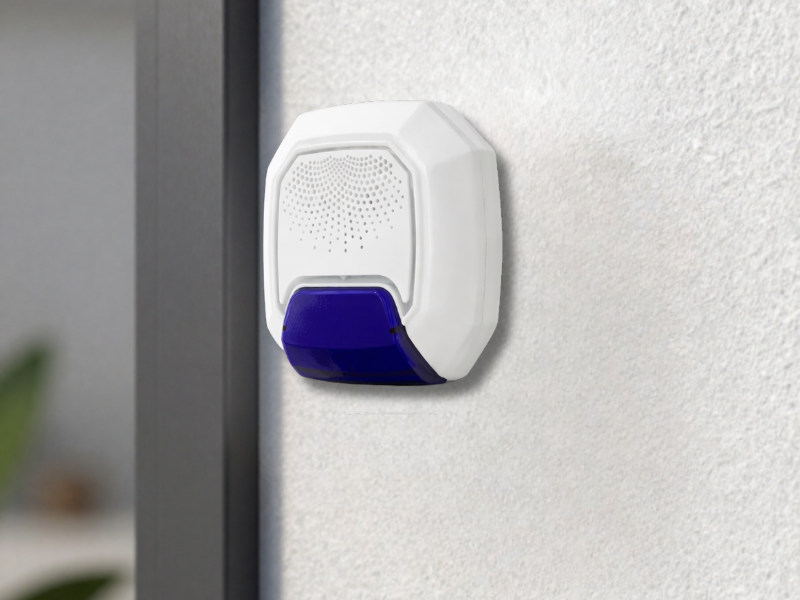
The VISION Z-Wave Outdoor Siren demonstrates how smart sirens fit into modern workflows:
- 115 dB audible alert acts as an immediate on-site escalation.
- Bright strobe visibility increases attention and deterrence.
- Tamper alerts trigger secondary escalation if the device is disturbed.
- Battery-backed operation ensures protection during power outages.
- Seamless integration with Z-Wave controllers enables programmable escalation logic.
When paired with devices such as motion sensors, shock sensors, flood sensors or door contacts, the siren becomes part of a layered early-warning system. Monitoring providers can configure staged responses:
- Local siren activation
- Client push notification
- Operator verification
- Authority dispatch (if verified)
Because the device operates on the Australian-certified 921.42 MHz Z-Wave frequency, it integrates cleanly into compliant systems. In distributed environments, sirens serve as both a deterrent and a verification tool, helping confirm event severity before higher-level escalation.
Rather than being a standalone alarm output, outdoor sirens should be treated as a structural component within alarm escalation architecture.
Technology Enablers That Improve Alarm Escalation Accuracy
Modern alarm escalation depends heavily on smart technology working behind the scenes. For monitoring providers, the goal isn’t just faster response; it’s smarter response. The right technology stack filters nuisance triggers, validates genuine threats, and automates decision-making so operators aren’t overwhelmed by avoidable events.
By combining intelligent device logic with automated workflows, providers can significantly reduce false alarms while improving reliability across residential and commercial sites. Below are the key technologies that make this possible:
- Cross-Sensor Verification – Uses combined logic such as motion + shock + door contact activation within a defined timeframe. This layered approach filters out environmental triggers such as wind, pets, or vibration, escalating only when correlated activity suggests a genuine intrusion.
- Video Verification Integration – Enables remote operator visual confirmation before dispatch. Reduces false dispatch rates and supports compliance with verified response protocols in many jurisdictions.
- Z-Wave Mesh Redundancy – Devices communicate through a mesh network, acting as repeaters. This strengthens signal reliability in distributed security systems and reduces single points of failure.
- Tamper & Supervision Alerts – Monitors device integrity and reports interference or removal attempts. Ensures escalation workflows account for sabotage scenarios.
- Battery Monitoring & Low-Power Reporting – Proactively alerts when device batteries are low. Prevents silent system failure during critical events.
- Cloud-Based Escalation Automation – Rule-based workflows automatically trigger defined escalation pathways. Reduces manual operator handling and improves consistency.
- Mobile App Push & SMS APIs – Instant multi-channel notifications increase the speed of acknowledgement and communication redundancy.
For monitoring providers, automated alarm escalation workflows mean fewer repetitive calls, faster verification, and more predictable operational performance, all while improving client satisfaction and reducing liability.
Common Alarm Escalation Failures (And How to Avoid Them)
Even the most advanced systems can fall short if alarm escalation processes aren’t properly designed and maintained. For monitoring providers, many operational issues stem not from hardware faults, but from poorly structured escalation logic.
One of the most common problems is over-escalation. Dispatching police without proper verification may seem cautious, but repeated false call-outs can result in fines, strained relationships with authorities, and frustrated clients. On the other hand, under-escalation can be just as damaging. Delayed responses to genuine high-risk triggers increase liability exposure and erode trust.
Another frequent failure is the lack of zone differentiation. Treating a warehouse intrusion the same as an internal office motion alert ignores risk profiles and often leads to inefficient responses. Similarly, ignoring tamper signals can allow device interference or sabotage attempts to go unchecked, creating serious security gaps.
Operational weaknesses also appear in process management. A lack of documented escalation protocols leads to inconsistent operator decisions, especially during high-volume periods. Poorly maintained device batteries can quietly disable parts of a system, while reliance on a single communication path, such as voice calls only, leaves escalation vulnerable to network outages.

Final Thoughts
For monitoring providers, alarm escalation is no longer just a back-end process. Clients expect fast, accurate, and structured responses. Delivering that requires layered logic, verified detection, and intelligent deterrence.
Smart devices like the VISION Z-Wave Outdoor Siren demonstrate how physical alerting can be integrated into programmable escalation pathways, supporting staged response models.
The key is designing alarm escalation at the system planning stage, not after installation. Multi-zone logic, redundant communication paths, and automated workflows ensure long-term scalability and compliance.
Digital Home Systems supports certified smart security deployments across Australia, New Zealand, and the Pacific, providing products, training, and technical guidance to help monitoring providers build resilient escalation frameworks.
If you’re reviewing your current response protocols, speak to DHS about integrating intelligent siren-based alarm escalation into your monitoring portfolio.