In modern security and access environments, expectations for gate performance have risen dramatically. Property owners, facility managers, and installers now demand smooth movement, quiet operation, enhanced safety, and long equipment lifespan. These expectations have pushed manufacturers to refine the motion intelligence behind sliding gate system—especially through advanced speed control and soft start technologies.
In earlier generations, sliding gate motors were essentially on/off devices. They started abruptly, ran at a fixed speed, and stopped hard against mechanical limits. While functional, these systems created excessive mechanical stress, increased maintenance costs, and presented avoidable safety risks.
Today’s professional sliding gate automation systems use intelligent motor control to manage acceleration, cruising speed, and deceleration with precision. When properly configured, these features dramatically improve user experience while protecting the mechanical structure of the gate.
This in-depth guide explains how speed control and soft start work, why they are critical, how installers should configure them, and what property owners should look for when selecting a modern sliding gate automation solution.
What Is Sliding Gate Automation?
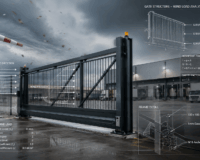
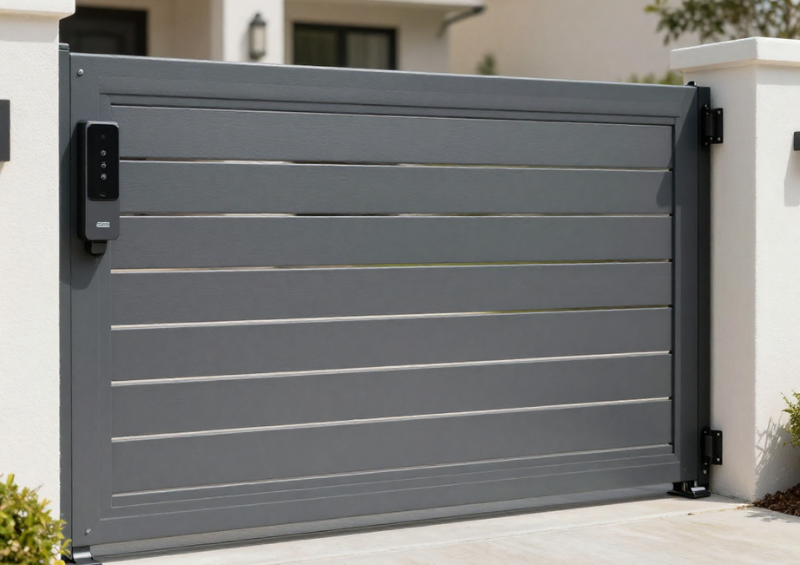
Sliding gate automation refers to the motorised mechanism that moves a gate horizontally along a ground track or cantilever system. It replaces manual pushing with controlled electric movement triggered by remotes, intercoms, keypads, vehicle loops, or smart home systems.
A typical system consists of a gate operator, control board, drive gear, rack, safety devices, and access control interface. While the motor provides the force, the control board determines how intelligently that force is applied.
Modern sliding gate automation systems are designed not only to move the gate but to manage motion in a controlled and safe manner. This is where soft start and speed control become essential.
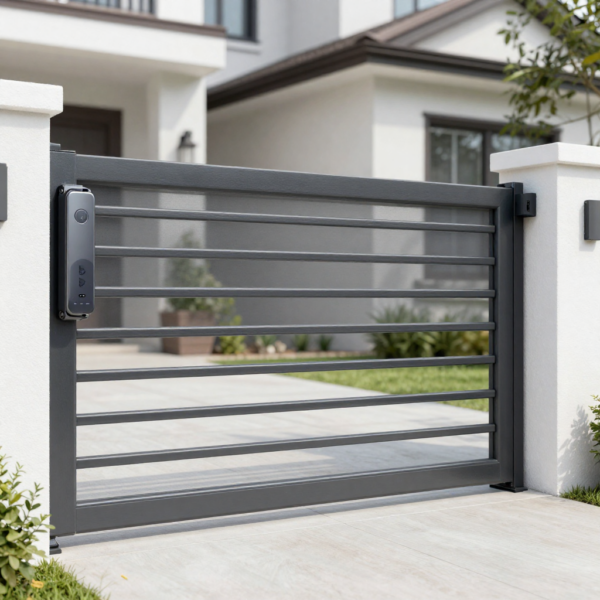
Why Motion Quality Matters in Modern Gate Systems
Gate automation is no longer judged solely on whether the gate opens. Today’s installations are evaluated on how well the gate moves.
Poor motion control can lead to:
- Jerky startup
- Loud end-of-travel impact
- Excessive vibration
- Premature mechanical wear
- Increased service calls
- Higher safety risk
In contrast, properly tuned sliding gate automation delivers smooth, predictable movement that reduces stress on both the equipment and the surrounding structure.
For high-traffic residential estates, commercial sites, and industrial facilities, motion quality directly affects long-term reliability and user satisfaction.
Understanding Soft Start in Sliding Gate Automation
Soft start is one of the most important motion features in modern gate operators. It refers to the controlled ramp-up of motor speed when the gate begins moving.
Instead of applying full power instantly, the control board gradually increases the motor output over a short period. This allows the gate to begin moving gently before reaching its normal travel speed.
From a mechanical perspective, soft start significantly reduces shock loading on the gearbox, rack, and gate frame. From an electrical standpoint, it reduces inrush current and heat stress within the motor.
In real-world operation, users immediately notice the difference. Gates equipped with properly configured soft start feel smoother, quieter, and more refined.
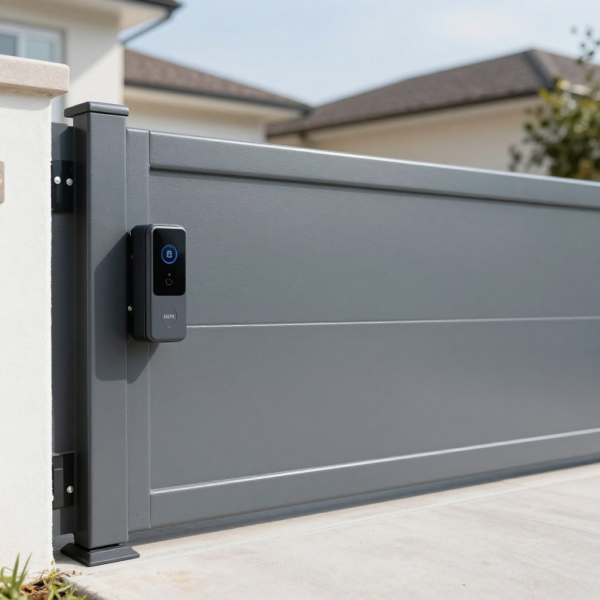
Key Benefits of Soft Start Technology
The advantages of soft start extend far beyond comfort. One of the biggest benefits is reduced mechanical stress. When a heavy sliding gate starts abruptly, the sudden torque spike can place enormous strain on gears, bearings, and mounting points. Over time, this leads to accelerated wear.
Soft start also contributes to noise reduction. Hard-start motors often produce a noticeable clunk or jolt when beginning movement. Gradual acceleration eliminates this effect, which is particularly important in residential environments.
Another major advantage is improved safety. Sudden gate movement can surprise nearby pedestrians or drivers. Soft start ensures predictable motion, giving people time to react.
Finally, soft start improves system longevity. Installations that use proper ramp-up control typically experience fewer mechanical failures and lower lifetime maintenance costs.
Speed Control in Sliding Gate Systems
While soft start governs how the gate begins moving, speed control manages how the gate behaves throughout the entire travel cycle.
Modern sliding gate automation systems often allow installers to adjust the gate’s operating speed. This includes the main travel speed as well as the slow-down phase near the end of movement.
Speed control is typically achieved using PWM-controlled DC motors or inverter-driven AC motors. These technologies allow precise adjustment rather than simple full-speed operation.
The ability to fine-tune speed is especially important for heavy gates, high-cycle commercial sites, and locations where safety is a priority.
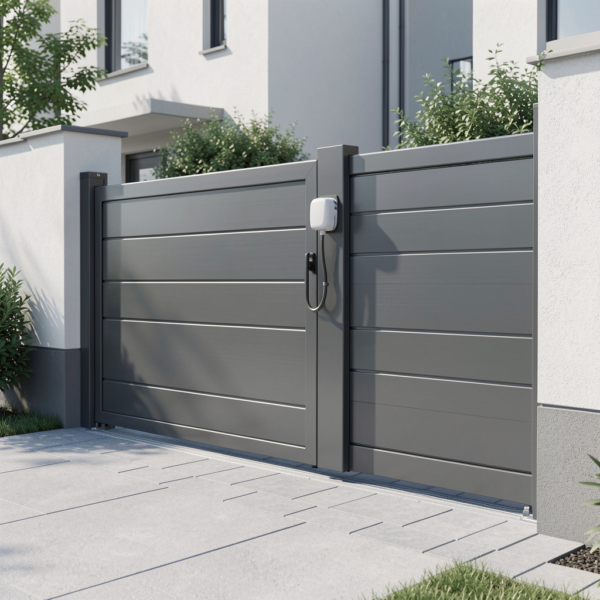
The Role of Soft Stop in Professional Gate Operation
Soft stop is the counterpart to soft start and is equally important. It ensures the gate slows down gradually before reaching the fully open or closed position.
Without soft stop, the gate may strike the end stop with significant force. Over time, this can loosen hardware, damage rollers, and create loud impact noise.
With properly configured soft stop, the sliding gate automation system decelerates smoothly and settles gently into position. This not only protects mechanical components but also improves positioning accuracy for locking and access control.
In premium installations, the combination of soft start, controlled travel speed, and soft stop creates a smooth, professional motion profile.
Variable-Speed vs Fixed-Speed Gate Operators
Not all gate motors offer the same level of performance. Older or budget systems often operate at a fixed speed. These units typically lack refined motion control and may rely heavily on mechanical limits.
Modern sliding gate automation systems increasingly use variable-speed technology. These operators allow installers to adjust acceleration, cruising speed, and deceleration independently.
The advantages of variable-speed systems include smoother motion, better safety response, reduced wear, and quieter operation. For most new installations, variable-speed control should be considered a baseline requirement rather than a premium upgrade.
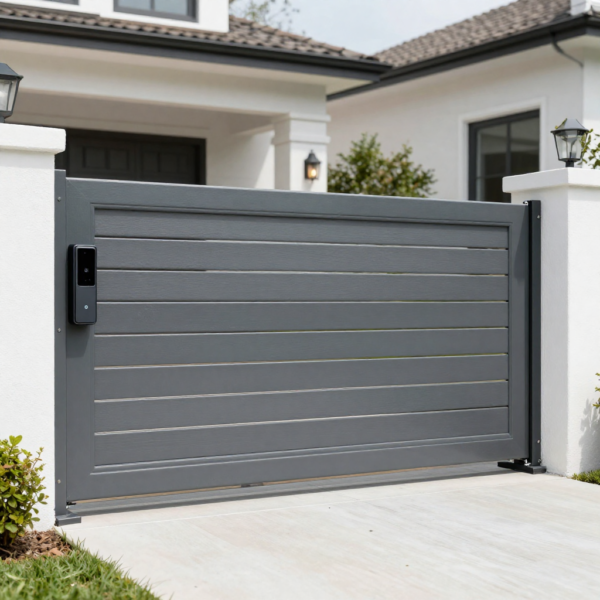
Encoder Feedback and Intelligent Motion Control
Many high-end sliding gate automation systems incorporate encoder feedback to improve motion precision.
An encoder monitors the motor’s speed and position in real time. This allows the control board to maintain consistent movement even when external conditions change, such as wind load or gate weight variations.
Encoder-based systems can also detect abnormal resistance more accurately, which improves obstacle detection and automatic reversal performance.
For commercial or high-duty-cycle environments, encoder feedback is highly recommended because it provides tighter control and better long-term reliability.
Safety Advantages of Controlled Gate Speed
Speed control is not only about smoothness — it is a critical safety feature.
Controlled motion reduces the kinetic energy of the moving gate, which lowers the risk of injury or vehicle damage if contact occurs. It also improves the system’s ability to detect obstructions through motor current monitoring.
When properly configured, sliding gate automation systems with intelligent speed control can respond more quickly and reliably to obstacles in the gate path.
In many jurisdictions, proper speed management also supports compliance with applicable safety expectations for automated gates.
Environmental Factors That Affect Speed Settings
Real-world site conditions can significantly influence how a sliding gate automation system should be tuned.
Wind is one of the most important factors. Large solid gates exposed to strong winds may require slower speeds and longer soft start ramps to prevent strain on the motor.
Track condition also plays a major role. Dirty, uneven, or poorly aligned tracks can create jerky movement that no amount of electronic tuning can fully compensate for.
Temperature extremes can affect lubrication and motor efficiency, while long-term gate sag or misalignment can increase rolling resistance.
Because of these variables, speed settings should always be verified under real operating conditions rather than relying solely on factory defaults.
Best Practices for Installer Configuration
Achieving smooth and safe operation requires a structured setup process.
Installers should first ensure the gate moves freely by hand. Mechanical issues must be resolved before any electronic tuning begins.
Next, the soft start ramp should be adjusted to provide gentle but responsive acceleration. The full travel speed should then be set based on gate weight, site safety requirements, and user expectations.
The slow-down zone near the end of travel should be configured to prevent impact while maintaining reasonable cycle time. Finally, full safety testing must be performed, including obstruction reversal and photocell response.
Skipping any of these steps can significantly reduce the effectiveness of the sliding gate automation system.
Common Mistakes to Avoid
Several common errors can undermine even high-quality equipment.
Setting the gate speed too high is one of the most frequent mistakes. While faster movement may seem attractive, it increases wear and reduces safety margins.
Disabling soft start to “make the gate quicker” is another serious error. This dramatically increases mechanical stress and noise.
Poor rack alignment and inadequate gate maintenance can also create jerky motion that electronic settings cannot fix.
Finally, failing to perform full-cycle testing under load is a major oversight. Every sliding gate automation installation should be thoroughly tested before handover.
Maintenance for Long-Term Smooth Performance
Even the best-configured system requires regular maintenance.
Monthly visual checks should confirm smooth movement, normal noise levels, and proper rack engagement. Quarterly maintenance should include track cleaning, hardware inspection, and safety device verification.
An annual professional service should recalibrate limits, verify encoder accuracy, check motor current draw, and perform a full safety audit.
With proper maintenance, modern sliding gate automation systems can deliver many years of reliable service.
When to Upgrade Your Sliding Gate Automation
Older gate systems may lack the motion control features expected today.
Common signs that an upgrade is needed include hard starts, loud slamming, inconsistent speed, frequent repairs, or lack of obstacle sensitivity.
Upgrading to a modern sliding gate automation system typically results in quieter operation, improved safety, lower maintenance costs, and better compatibility with smart access technologies.
Explore our complete guide on how to control your sliding gate system
Future Trends in Sliding Gate Automation
The technology continues to evolve rapidly. Brushless DC motors are becoming more common, offering higher efficiency and finer speed control.
Adaptive speed systems are emerging that automatically adjust performance based on gate weight, wind load, and usage patterns. Cloud connectivity is also enabling remote diagnostics and predictive maintenance.
As these innovations mature, sliding gate automation will become even smoother, safer, and more intelligent.
Conclusion
Speed control and soft start features have fundamentally transformed modern sliding gate automation. What was once a simple motor-driven movement is now a carefully engineered motion profile designed to protect equipment, enhance safety, and deliver premium user experience.
For installers, proper configuration is just as important as selecting quality hardware. For property owners, investing in a well-tuned sliding gate automation system pays long-term dividends in reliability, quiet operation, and reduced maintenance.
In today’s professional installations, soft start and intelligent speed control are essential—not optional—for achieving smooth, safe, and durable gate performance.